
Swing Fixes
How to Fix a Golf Slice: The 5 Most Common Causes
Infographic
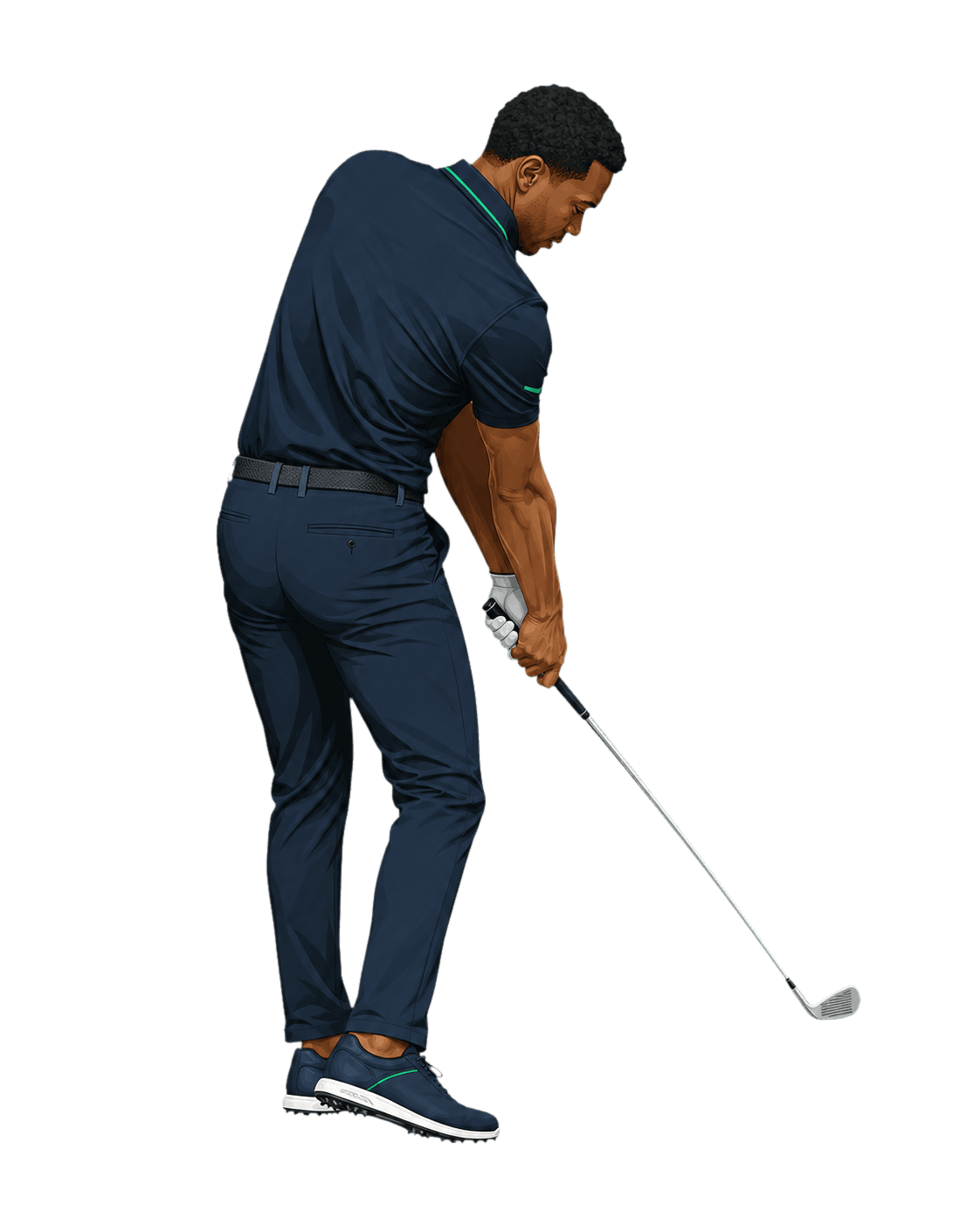
Read the motion
What Causes a Golf Slice?
A slice happens when the ball curves sharply from left to right (for right-handed golfers).
The 5 Most Common Causes
An out-to-in club path. When the club travels from outside the target line to inside on the downswing, the ball starts left and curves right.
The Club Path vs Face Angle Relationship
Here is the key relationship to review: face angle and club path work together to shape where the ball starts and how much it curves.
What Causes a Golf Slice?
A slice happens when the ball curves sharply from left to right (for right-handed golfers). It feels weak, it loses distance, and it is the most common fault among recreational players. The good news: a slice always has a mechanical cause, and mechanical causes can be fixed.
The two primary factors in any curved shot are club path and face angle. Club path is the direction the clubhead travels through the hitting zone. Face angle is where the face is pointing at impact. A slice is caused when the face angle is significantly open relative to the club path, which makes the ball curve hard to the right.
Stop reading — start diagnosing
See if this is actually your swing — free.
Get your top fix, three drills, and a 7-day plan in about a minute. Free to start.
The 5 Most Common Causes
1. An out-to-in club path. When the club travels from outside the target line to inside on the downswing, the ball starts left and curves right. This path is often caused by the upper body leading the downswing — the shoulders unwind before the hips clear, and the club swings across the body.
2. A weak grip. A grip where both hands are rotated too far toward the target (counterclockwise for right-handers) makes it harder to close the face at impact. The club arrives with an open face, producing the curve.
3. Poor weight transfer. Staying too much on the back foot through impact causes the body to get in the way of the swing. It also forces the club to cut across the ball from outside to inside.
4. Early extension. Standing up out of your posture through the downswing blocks hip rotation. When the hips stall, the arms take over and tend to swing across the ball, creating an out-to-in path.
5. Aiming left as a compensation. Many slicers aim further left to allow for the curve, which actually makes the path worse. The more you aim left, the more outside-to-in your path becomes.
The Club Path vs Face Angle Relationship
Here is the key relationship to review: face angle and club path work together to shape where the ball starts and how much it curves. The gap between them (often called face-to-path) is often more useful than either number alone. The exact ball flight also depends on where the ball meets the face and how the club arrives at impact.
When the face is open relative to an out-to-in path, the ball can start away from the target and curve farther in the same direction. A smaller face-to-path gap generally produces less curve, but strike location also matters. The goal is to understand and narrow the repeated relationship, not chase one universal angle.
3 Drills to Try
The gate drill: place two tees just wider than the clubhead, one on each side of the ball. Swing through without hitting the tees. This forces an in-to-out or neutral path because an out-to-in swing will clip the outer tee.
The towel drill: place a head cover or folded towel under your right arm (for right-handers) and keep it there through the backswing. This encourages a connected swing that avoids the over-the-top move that creates out-to-in paths.
The face tape test: place impact tape or foot spray on the face before hitting. A slice almost always shows strikes toward the heel — where the face is most open relative to the path.
When to Seek Professional Help
If you have tried these fixes and the slice persists, a few sessions with a qualified instructor who can see your swing in person are worth more than dozens of range sessions alone. A good coach can identify compensations that are hard to see without someone watching you from the right angle.
SwingVantage can give you data-driven evidence of whether your path and face angle are improving between lessons — use it as a supplement to coaching, not a replacement.