
Advanced
If Casting in the Golf Swing Keeps Showing Up, Read This First
Infographic
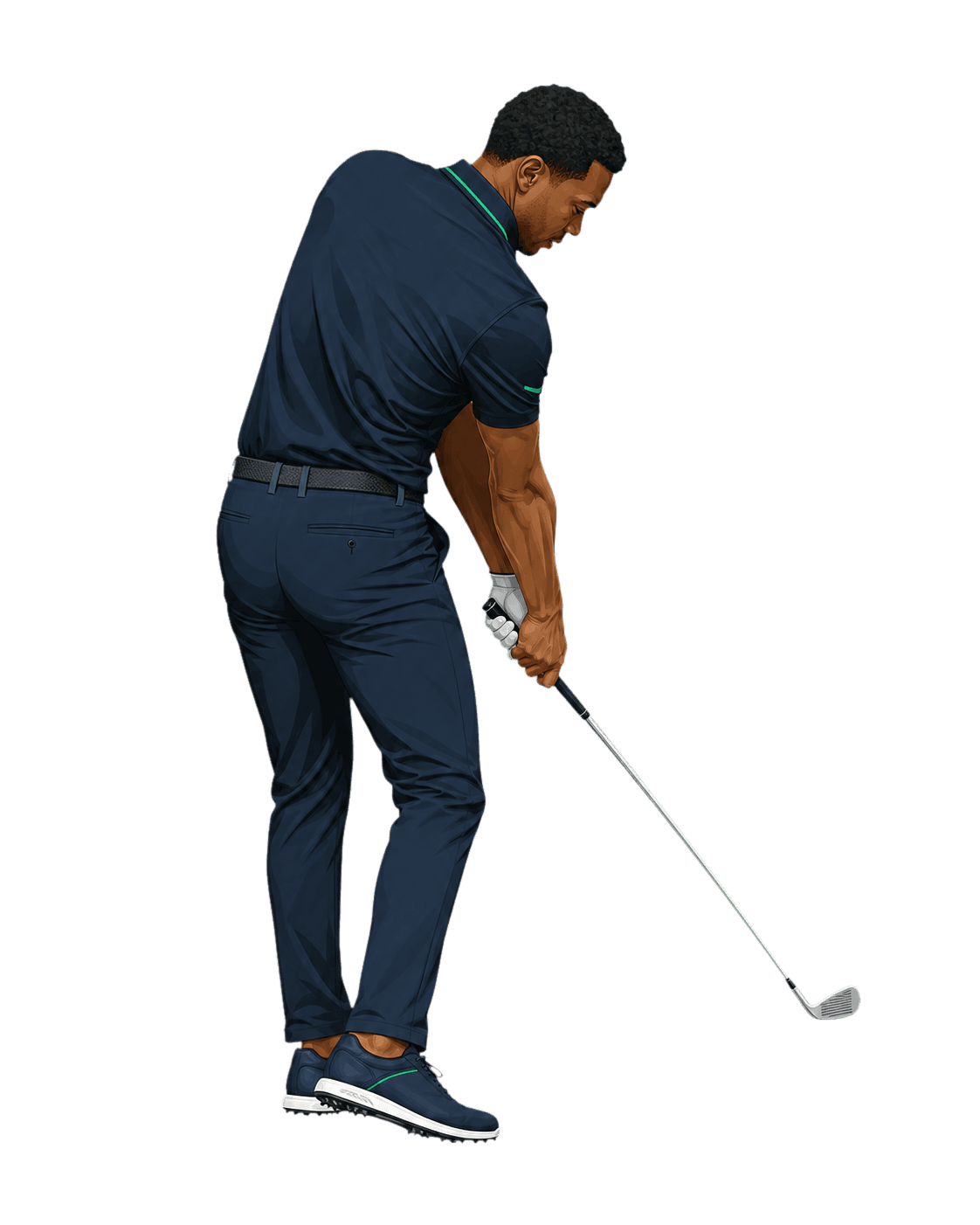
Read the motion
Who This Is For
This is for the athlete whose fundamentals hold under pressure, whose miss pattern is narrow but stubborn, and who has stopped getting paid by generic advice.
The Pattern At An Advanced Level
At this level, trouble with casting in the golf swing rarely presents as one obvious flaw.
The Interacting Variables
Three variables interact here: the sequence (what fires when), the space (the room the body leaves itself), and the intent (what the athlete is actually trying to do on this rep).
Past a certain level, casting in the golf swing stops being one lever and becomes a system of trade-offs. This analysis is for athletes and coaches ready to work at that resolution.
Who This Is For
This is for the athlete whose fundamentals hold under pressure, whose miss pattern is narrow but stubborn, and who has stopped getting paid by generic advice. It is also for coaches who want language for why two correct-sounding cues can fight each other in the same swing.
A quick self-check: if your typical rep and your best rep are still far apart, broad consistency work will pay better than anything below. If they have converged and the remaining gap is small but immovable, you are the reader this was written for.
Stop reading — start diagnosing
See if this is actually your swing — free.
Get your top fix, three drills, and a 7-day plan in about a minute. Free to start.
The Pattern At An Advanced Level
At this level, trouble with casting in the golf swing rarely presents as one obvious flaw. It presents as a small, consistent leak: a timing margin that shrinks at full intensity, a contact window that drifts under fatigue. In golf, the ball flight you see is downstream of the clubface and club path at impact, so read those before judging the takeaway or chasing a new tempo. The leak survives ordinary practice precisely because it is small enough to compensate for.
The Interacting Variables
Three variables interact here: the sequence (what fires when), the space (the room the body leaves itself), and the intent (what the athlete is actually trying to do on this rep). Change any one and the other two adapt, which is why isolated positional fixes so often regress. Advanced work means choosing which variable to hold constant while you move another.
The interactions are where diagnosis gets interesting. A sequence problem can masquerade as a space problem when the body borrows room to buy time, and an intent change can silently repair a sequence by removing the reason it hurried. Reading which variable is the driver and which are passengers is the core skill at this level, and it only develops through deliberate one-variable experiments.
Trade-Offs Most Guides Skip
Every gain buys something and costs something. More rotation can buy speed and cost timing margin. A tighter contact window can buy consistency and cost adaptability against variation. Guides that promise improvement without naming the cost are describing half the transaction; your job is deciding which costs your game can afford. Be honest about what a phone video can confirm: it is an estimate with limits, not a lab measurement. Build confidence the boring way, with a retest of the same task under the same conditions.
The trade-off lens also explains a familiar frustration: why a change that helped a training partner hurt you. You bought the same gain but paid from different accounts, and one of you could not afford the cost.
How To Study Your Own Data
Study distributions, not singles: five to ten reps per condition, one variable changed at a time, identical camera setup throughout. Compare your typical rep against your typical rep from the previous block, and let your best rep be entertainment. Note the context of every session, because fatigue and pressure are variables too.
Keep the analysis honest by writing the prediction down before reviewing the clips: which variable you moved, and what should be different if the theory is right. Reviewing video without a prediction turns analysis into a mirror; you will find whatever you walked in expecting to find.
When Refinement Beats Rebuild
Rebuilds are seductive and expensive. Refinement wins when the current pattern scores acceptably and the leak is one variable wide; rebuild only when the ceiling of the pattern is provably below your goals and you can afford the valley. Most advanced athletes who think they need a rebuild need a sharper diagnosis.
Retest Standards At This Level
Raise the bar for declaring victory: the change must hold across sessions, at full intensity, and under at least light pressure, on the typical-rep measure rather than the highlight. When you want structure instead of guesswork, the app runs the same diagnose, one-fix, retest loop this article describes. To have it guide you, start with golf swing analysis, the golf slice fixer, the 7-day golf slice challenge, or a sample golf report. If the pattern creates pain, gets worse with practice, or does not respond after a few focused sessions, work with a qualified coach who can see the full movement. A digital guide can help you structure practice, but it should not replace medical advice, safety judgment, or in-person coaching when those are needed.
FAQ
Is this level of detail worth it for amateurs?
Only past a certain plateau. If broad fundamentals still move your results, work those; the interacting-variables view earns its complexity when simple changes stop paying.
Can phone video support advanced work on casting in the golf swing?
Partly. Consistent-angle video reads sequencing and contact windows well; fine kinetic detail needs measurement tools. Know which of your questions the camera can actually answer.
Next Step
Pick the one variable your data most implicates, hold the others deliberately constant for a block, and retest on your typical-rep standard. One loop, run honestly, beats a month of collected tips.