Swing Fixes
How to Stop Topping the Golf Ball
Infographic
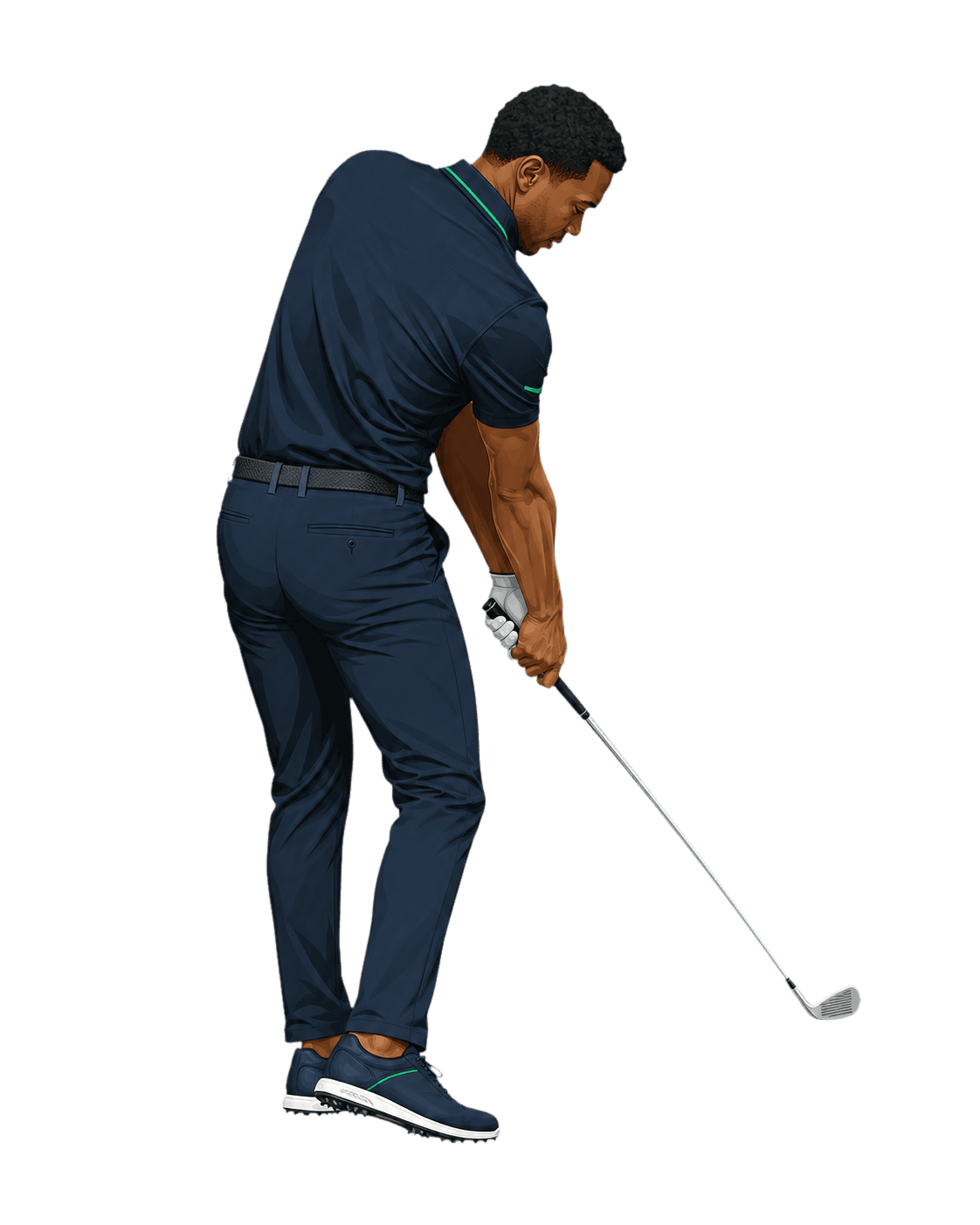
Read the motion
What to notice
How to Stop Topping the Golf Ball. Topping the ball is a low-point problem
What it leads to
not a lifting problem. Learn the 5 real causes and 3 drills to start making ball-first contact.
What Topping Actually Is
A topped shot happens when the leading edge of the club strikes the middle or top of the ball instead of the bottom. The ball squirts low along the ground with almost no carry. It feels like you "came up" off the ball — and that feeling sends most golfers down the wrong path.
Stop reading — start diagnosing
See if this is actually your swing — free.
Get your top fix, three drills, and a 7-day plan in about a minute. Free to start.
Here is the key idea: topping is a low-point problem. Every swing has a point where the clubhead reaches the bottom of its arc. With an iron off the ground, that low point should be slightly in front of the ball, so the club is still descending at impact and catches the ball first, then the turf. When the low point moves behind the ball or upward, the club is already rising by the time it reaches the ball — and it catches it high. That is a top.
Why You Top It — the 5 Common Causes
1. Early extension (standing up). If your hips push toward the ball and you lose your posture on the downswing, your whole swing center rises — and the clubhead rises with it. This is the most common cause of topping among recreational players.
2. Hanging back on your trail foot. If your weight stays on your back foot through impact, the low point shifts behind the ball. The club bottoms out too early and is climbing by the time it reaches the ball.
3. Trying to "lift" or scoop the ball into the air. The loft on the club is what gets the ball up — you do not have to help it. When you flip your hands and try to scoop, you raise the low point and add the very topping you are trying to avoid.
4. Ball position too far forward. If the ball sits too far up in your stance, the club may already be past its low point and traveling upward when it arrives.
5. Lifting your head or losing posture early. Pulling up to see the result before you have hit it changes your spine angle and pulls the club up with you.
A Quick Self-Check
Hit a few shots off a low tee or a clean lie and watch your divots. Solid iron contact leaves a shallow divot after the ball. If you take no divot and the ball comes off low, your low point is behind the ball. If your misses are mostly thin and low, this article is for you.
3 Drills to Fix It
The line drill. Spray a short line of foot spray or draw a chalk line on the mat or turf. Place the ball just behind the line and try to make your divot start on or just in front of the line. This trains your low point to move forward, ahead of the ball.
The step-through drill. Hit small, slow shots where you step your trail foot toward the target just after impact. You cannot step through while hanging back, so this drill forces your weight forward and moves your low point ahead of the ball.
The posture-hold drill. Make practice swings with your back against a wall or a chair behind your hips. The goal is to keep your trail hip from drifting back into the wall on the downswing — that keeps your spine angle and stops you from standing up out of the shot.
Mistakes to Avoid
Do not try to fix topping by hitting down harder or swinging easier in isolation — those treat the symptom. Do not move the ball way back in your stance as a permanent fix; that masks the real cause and creates new problems. And do not consciously try to keep your head down so hard that you block your rotation — the goal is to keep your posture, not freeze your body.
When to Work With a Coach
If you have worked on weight shift and posture and still top the ball regularly, a couple of lessons with a qualified instructor who can watch you in person is worth far more than another bucket alone. Early extension in particular is hard to feel and easy for a coach to spot.
SwingVantage can show you whether your contact and low-point tendencies are improving between sessions — use it as a supplement that tracks your progress, not a replacement for hands-on coaching. Remember that single-camera findings are heuristic estimates that get more reliable as you add data.