
Advanced
If Padel Bandeja Technique Keeps Showing Up, Read This First
Infographic
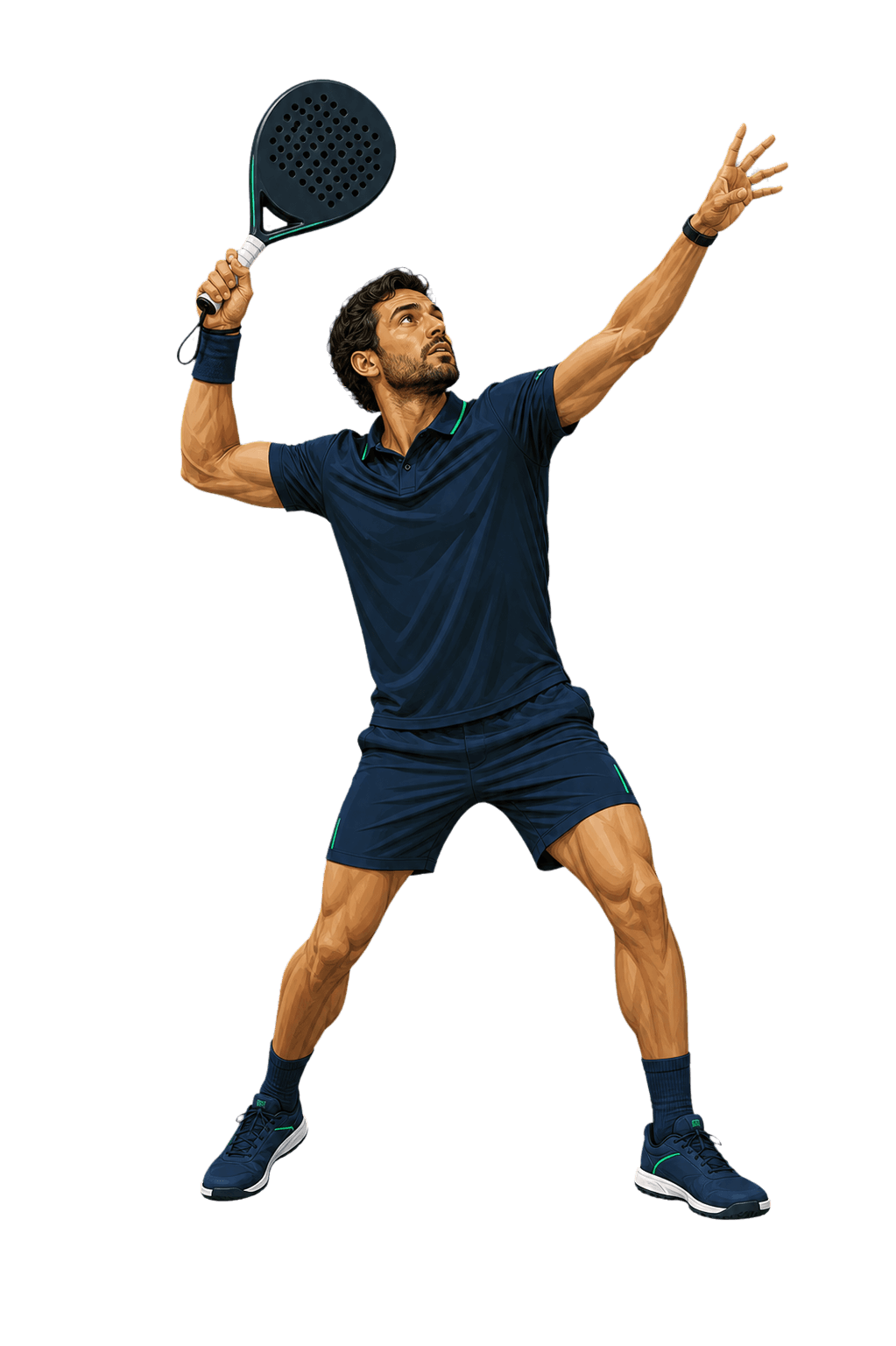
Read the motion
Who This Is For
This guide is for athletes who have strong basic skills even under pressure, and who have a consistent but stubborn mistake pattern.
The Pattern At An Advanced Level
At an advanced level, issues with the padel bandeja technique aren't usually obvious.
The Interacting Variables
Three main factors affect your performance: the sequence (the order of your movements), the space (how much room your body has to move), and the intent (what you aim to do with each shot).
Once you reach a certain skill level in padel, the bandeja technique becomes more complex. It's not just about one simple move anymore; it's about balancing different elements. This guide is for athletes and coaches who are ready to explore these details.
Who This Is For
This guide is for athletes who have strong basic skills even under pressure, and who have a consistent but stubborn mistake pattern. It's also for coaches who need to explain why two tips that sound right might not work together in a swing.
Here's a quick check: if your regular performance and your best performance are still very different, focus on consistency first. But if they are close and the remaining gap won't budge, this guide is for you.
Stop reading — start diagnosing
See if this is actually your swing — free.
Get your top fix, three drills, and a 7-day plan in about a minute. Free to start.
The Pattern At An Advanced Level
At an advanced level, issues with the padel bandeja technique aren't usually obvious. Instead, you might notice small, consistent problems. For example, your timing might be off when you play at full speed, or your contact with the ball might suffer when you're tired. In padel, where you stand and how you prepare can determine if the glass wall helps or hinders you. The volley is more about control than power. These small issues often go unnoticed in regular practice because they're easy to adjust for on the fly.
The Interacting Variables
Three main factors affect your performance: the sequence (the order of your movements), the space (how much room your body has to move), and the intent (what you aim to do with each shot). Changing one affects the others, which is why fixing just one part of your position often doesn't last. Advanced training involves deciding which factor to keep the same while you adjust another.
Understanding how these factors interact is key. A problem with your sequence might look like a space issue if your body tries to compensate by moving differently. Changing your intent can fix a sequence problem by removing the need to rush. Figuring out which factor is causing the issue and which are just reacting is a skill that develops through focused experiments, changing one variable at a time.
Trade-Offs Most Guides Skip
Improving one part of your game often means sacrificing another. More rotation might increase speed but make timing harder. A smaller contact window can make you more consistent but less adaptable to changes. Guides that promise improvement without mentioning the downsides are only telling half the story. Your job is to decide which trade-offs you can handle. Remember, a phone video is just an estimate, not a precise measurement. Build confidence by retesting the same task under the same conditions.
This idea also explains why a change that helps one player might hurt another. You both gain something, but you pay in different ways, and one of you might not be able to afford the cost.
How To Study Your Own Data
Look at groups of shots, not just one: take five to ten shots per condition, change only one variable at a time, and keep the camera angle the same. Compare your usual performance with your past performance, and don't focus too much on your best shot. Note the conditions of each session, as things like fatigue and pressure also affect performance.
Keep your analysis honest by writing down what you expect to see before watching the videos: note which variable you changed and what you think will happen. Without a prediction, watching the video can just confirm what you already believe.
When Refinement Beats Rebuild
Completely changing your technique can be tempting but costly. Refining your current technique is better when your performance is generally good and the problem is small. Only consider a full rebuild if your current technique clearly can't meet your goals and you have the time and resources to make major changes. Most advanced players who think they need a complete overhaul actually need a more precise diagnosis.
Retest Standards At This Level
Set high standards for success: any changes you make should work across different sessions, at full speed, and under at least a little pressure. Focus on your usual performance, not just your best moments. For a guided version of this loop, start with padel analysis or a free swing analysis. For more on this, see Analyze your padel stroke and Drills for the back-wall rebound. If your technique causes pain, worsens with practice, or doesn't improve after focused sessions, consult a coach who can see the full picture. A digital guide can help organize practice, but it shouldn't replace medical advice, safety judgment, or in-person coaching when needed.
FAQ
Is this level of detail worth it for amateurs?
Only after you've hit a plateau. If improving basic skills still helps your results, focus on those. The complex view of interacting variables is useful when simple changes no longer make a difference.
Can phone video support advanced work on padel bandeja technique?
To some extent. Videos taken from the same angle can help you see the order of your movements and where you hit the ball. However, for detailed movement analysis, you'll need more precise tools. Know what questions your camera can answer.
Next Step
Choose the one variable that your data suggests is the issue, keep the others the same for a while, and retest based on your usual performance. The next shot you analyze is more valuable than ten you just remember.