
Technique
The Pickleball Third-Shot Drop: A Beginner-to-3.5 Guide
Infographic
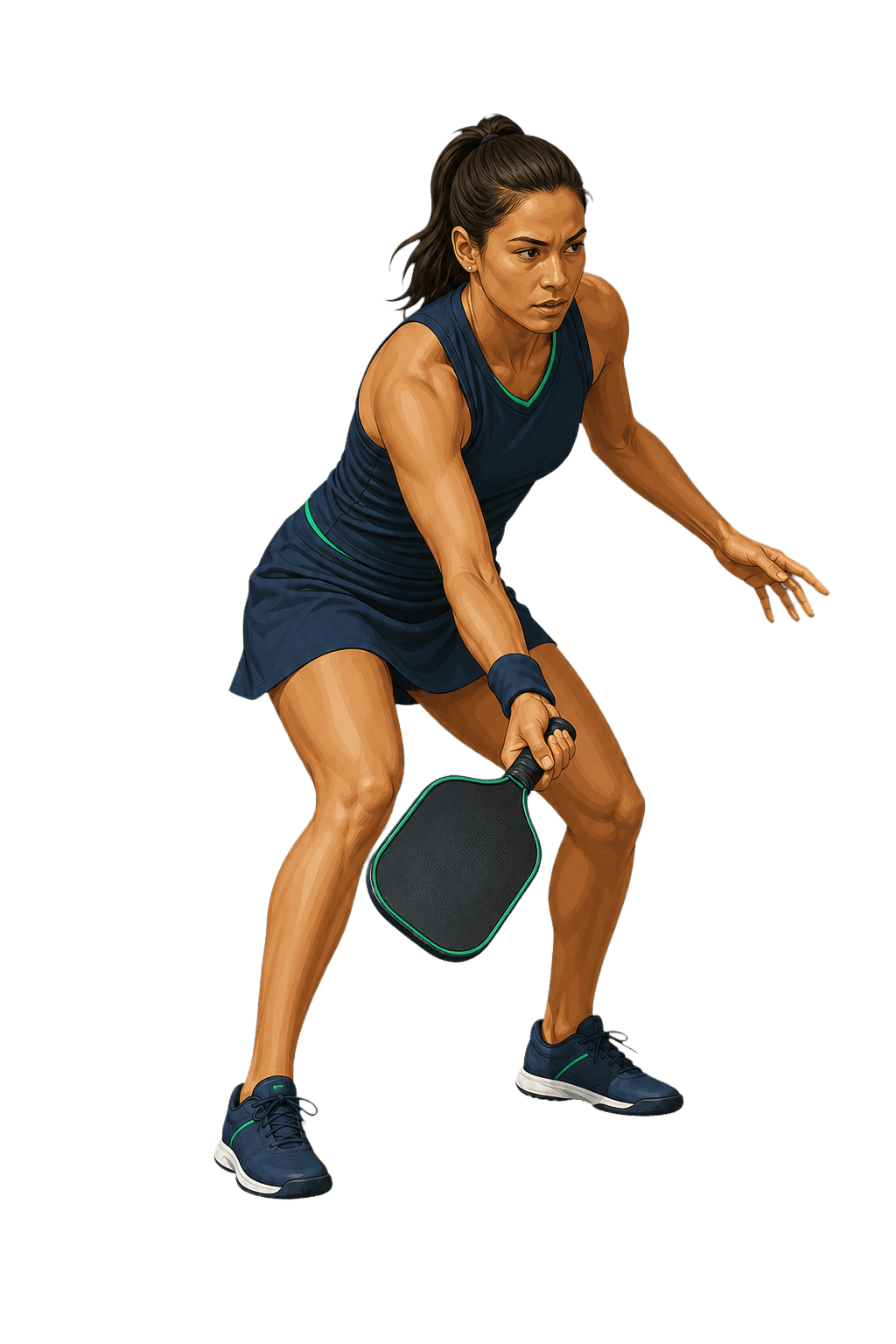
Read the motion
Why the Third Shot Decides the Point
In doubles pickleball, the serving team starts at a disadvantage: the returning team gets to the kitchen line first.
The Mechanics
A third-shot drop is a soft, lofted shot that arcs up, peaks on YOUR side of the net, and falls into the kitchen.
The Three Reasons Drops Fail
Netting it. You decelerated into the ball, used no leg lift, or contacted it behind your body.
Why the Third Shot Decides the Point
In doubles pickleball, the serving team starts at a disadvantage: the returning team gets to the kitchen line first. The third shot — the serving team's shot after the return — is how you erase that disadvantage. A good drop lands soft in the non-volley zone (the "kitchen" next to the net), can't be attacked, and buys you time to move up to the line. Miss it, and you stay pinned at the baseline trading drives you'll usually lose.
This is the single biggest skill gap between players rated 3.0 and those rated 3.5+, and it is NOT a tennis shot. There is no long backswing. The power comes from your legs, not a swing.
Stop reading — start diagnosing
See if this is actually your swing — free.
Get your top fix, three drills, and a 7-day plan in about a minute. Free to start.
The Mechanics
A third-shot drop is a soft, lofted shot that arcs up, peaks on YOUR side of the net, and falls into the kitchen. Four checkpoints:
1. Compact preparation. The paddle barely goes back past your hip. A long, tennis-style backswing is the number-one cause of inconsistent drops.
2. Lift with the legs. Bend your knees and extend them through the shot. The legs provide the upward lift; the arm stays calm and along for the ride.
3. Stable, slightly open paddle face. Set the angle early and keep your wrist quiet through contact. A flicking wrist makes the height unpredictable.
4. Contact out in front. Meet the ball ahead of your body, never beside or behind your hip.
The Three Reasons Drops Fail
Netting it. You decelerated into the ball, used no leg lift, or contacted it behind your body. Fix: drive the lift from your legs and commit to the upward arc.
Floating it (it gets attacked). Your paddle face was too open or you added too much pace, so the ball sat up above net height. Fix: a steadier, less open paddle face and softer hands.
Rushing forward. You sprinted to the line before the drop was actually unattackable. Fix: drop, take two steps, split-step (a small balancing hop as your opponent hits), and only advance behind a good ball.
A Practice Progression
- Stationary drops from the baseline to a cone target in the kitchen — 3 sets of 15. Track how many you make.
- Drop and advance — hit a drop, take two controlled steps, split-step; only move up behind an unattackable ball.
- Live drop rallies — drop against a partner feeding drives, working all the way to the line.
Film yourself from the side. SwingVantage's pickleball analysis reads your paddle-face angle, leg lift, and the arc relative to the net, then gives you the one thing to fix first.
The drop is hard, and that's exactly why it's worth the reps. It is the shot that lets you play the soft game where points are actually won.